

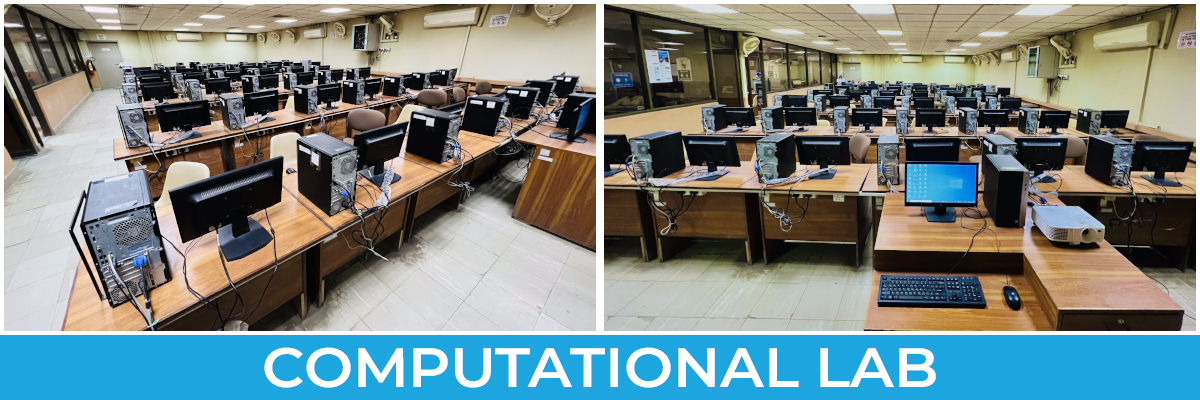


MF-101 IT FUNDAMENTALS AND APPLICATIONS
CREDIT HOURS
Theory = 2
Practical = 1
COURSE LEARNING OUTCOMES (CLOs)
| S. No. | CLOs | PLO | Taxonomy |
| 1 | Explain the fundamental concepts of ICT, programming and spreadsheets |
PLO-1 Engineering Knowledge |
Cognitive Level 2* |
| 2 | Apply programming and spreadsheet methods to solve basic engineering problems. |
PLO-2 Problem Analysis |
Cognitive Level 3* |
| 3 | Operate programming and spreadsheet software for programming and data processing, respectively |
PLO-5 Tool Usage |
Psychomotor Level 3* |
COURSE CONTENT
- Fundamentals of IT: Introduction to Information and Communication Technologies (ICT), Components and scope of ICT, ICT productivity tools, Emerging technologies and future trends, Ethical Considerations in Use of ICT Platforms and Tools, Applications of ICT in education, healthcare and finance. Digital citizenship.
- Data Representation and Number Systems: Binary, octal, decimal, hexadecimal systems, data representation: characters, numbers, multimedia.
- Databases: Fundamentals of databases: organization and storage, introduction to Information Systems (IS) and Management Information Systems (MIS), real world IS and MIS applications.
- Data Communication and Computer Networking: Network topologies, types of network
- Programming Languages: Evolution and structures: syntax, semantics, special purpose vs. general-purpose languages, comparative study of data types, control structures and algorithms, basics of coding, practical problem solving.
RECOMMENDED BOOKS
Text Book(s)
- Emily Jones, “Fundamentals of Computer Programming”, States Academic Press, 2022.
- Prasun Barua, “Fundamentals of Information and Communication Technology (ICT)”, Independently published, 2023.
Reference Book(s)
- Dr. Shun-Ping Chen, “Fundamentals of Information and Communication Technologies”, 1st Edition, Cambridge Scholars Publishing, 2020.
- Muhammad Misbahudeen, “The Fundamentals of Programming: Basic Terms and Concepts in Programming for Beginners”, 2024.
*For details of Taxonomy Levels CLICK HERE